
Skip to content

— Materials

Insulation materials: temperature limits, k-values and where each one fits

Six materials cover almost everything we install. Picking between them is three questions: how hot or cold does the line run, does water get at it, and how much room is there.

The k-value is the number that matters. It is thermal conductivity — Btu·in/hr·ft²·°F — and it tells you how much heat crosses one inch of the material. Lower is better: aerogel at 0.15 buys more R per inch than calcium silicate at 0.41, which is most of why one costs three times the other. The figures below are at a 100°F mean temperature; every mineral drifts upward roughly 0.0004 per °F of mean above that, which is why a hotter line wants proportionally more thickness rather than the same inch working harder.

The temperature limit is a hard stop, not a suggestion. Past it the binder cooks out, the material shrinks away from the pipe and you are left with a gap doing the insulating. Thickness is the other half of the spec — as a working rule 1.5 inches to 200°F, 2 inches to 350°F, 3 inches to 600°F and 4 inches above that; the reasoning is in how thick should steam pipe insulation be.

The jacket is a separate decision from the material and it is what keeps the material alive: aluminum, stainless or PVC over the top, banded with the laps shedding water. See metal jacketing. Prices below are installed, per square foot of finished surface, for the Arlington–DFW market — the same bands the calculator prices with.

— Materials

The material is the spec.

Same pipe underneath. The material decides the temperature it can take, the thickness you need, and what it costs per square foot.

Fiberglass

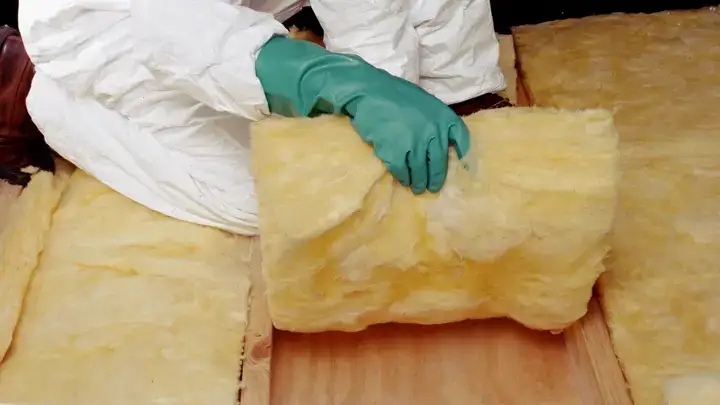
The workhorse for hot water and steam. Molded sections, fast to fit.

Service temp
to 850°F
Best for
Steam & hot water

$14–24 installed, per sq ft

Price this material

Mineral Wool

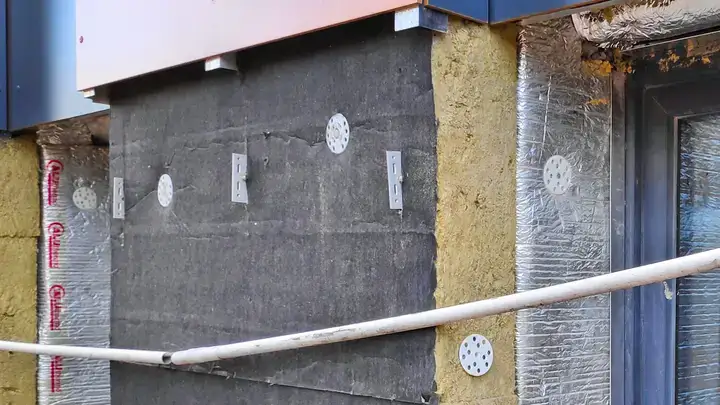
Dense and rugged for high-temp lines and fire-rated work.

Service temp
to 1,200°F
Best for
High temp & fire

$16–28 installed, per sq ft

Price this material

Calcium Silicate

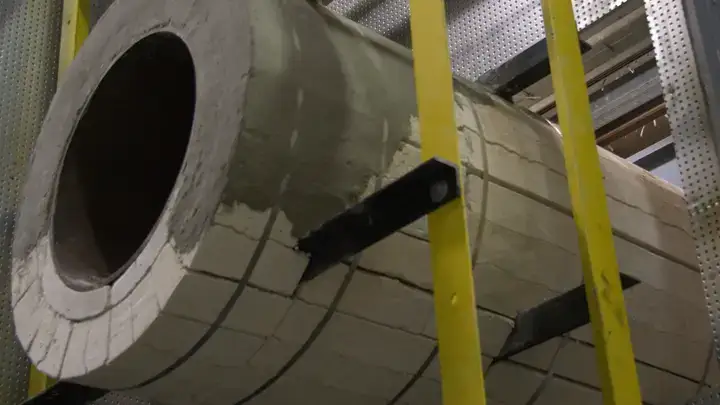
Rigid and abuse-proof — hot piping and equipment people climb on.

Service temp
to 1,200°F
Best for
Hot equipment

$24–40 installed, per sq ft

Price this material

Cellular Glass

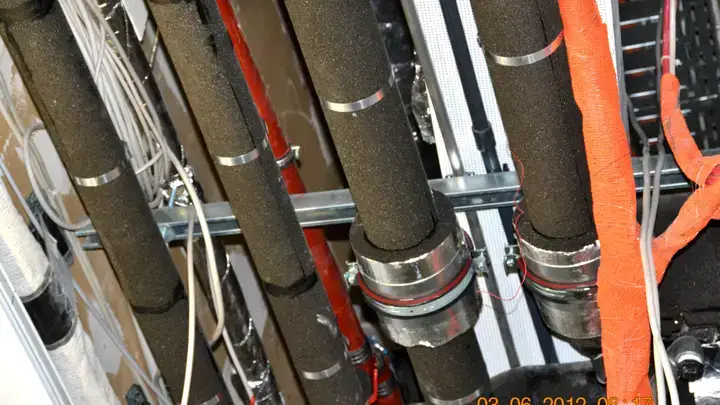
Closed-cell glass that absorbs no water. Cold, cryo and buried lines.

Service temp
−450–900°F
Best for
Cold & buried lines

$28–48 installed, per sq ft

Price this material

Aerogel

The thinnest R there is — for tight clearances where every inch counts.

Service temp
to 1,200°F
Best for
Tight clearances

$45–75 installed, per sq ft

Price this material

Removable Blanket

Silicone-cloth covers sewn to fit — insulation you take off and put back.

Service temp
to 1,200°F
Best for
Valves & doors

$220–$980 per sewn cover

Price this material

Fiberglass

Service temp
to 850°F
k at 100°F mean
0.24
Installed
$14–24 per sq ft

Molded pipe sections and board, glass fibers in a binder. The default for hot service and the cheapest R per inch on the list, which is why most of what leaves our benches is this.

Where it is the right answer

Steam, condensate, hot water, hydronic loops and hot process lines anywhere under its ceiling. Sections come molded to the pipe size, so fit-up is fast and a long run goes on in a day.

Where it is not

Cold service behind anything less than a flawless vapor jacket — wet fiberglass on a chilled line loses most of its R and never dries out. Also not where the covering takes abuse: it crushes, and crushed insulation is a gap.

Mineral Wool

Service temp
to 1,200°F
k at 100°F mean
0.25
Installed
$16–28 per sq ft

Spun rock fibers — denser and tougher than fiberglass, with a much higher ceiling and no meaningful change in k. Standard on everything hot enough to be past fiberglass.

Where it is the right answer

High-temperature piping and equipment, fire-rated assemblies, and any hot run in a space where the covering gets leaned on, bumped and re-hung.

Where it is not

Cold lines — it is fibrous, so it fails the same way fiberglass does when moisture reaches it. On a 180°F line it also buys nothing fiberglass would not have done for less.

Calcium Silicate

Service temp
to 1,200°F
k at 100°F mean
0.41
Installed
$24–40 per sq ft

Rigid blocks and curved segments of calcium silicate. It holds its shape under load and shrugs off physical abuse, and it is the only rigid mineral here that takes a boot.

Where it is the right answer

Hot piping and equipment people climb on, stand on or lean ladders against, and large-bore high-temperature runs where a soft material would be crushed inside a year.

Where it is not

Anywhere R per inch is the constraint — its k is nearly double fiberglass, so the same inch insulates noticeably less. It also absorbs water, so it is not a cold-side material.

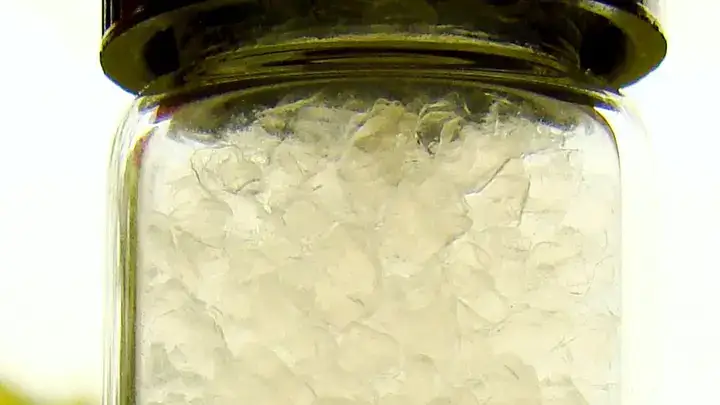
Cellular Glass

Service temp
−450–900°F
k at 100°F mean
0.29
Installed
$28–48 per sq ft

Closed-cell glass. It absorbs no water at all, which makes it the one material on this list that cannot fail the way fibrous insulation fails on cold service.

Where it is the right answer

Chilled, low-temperature and cryogenic lines, buried pipe, and outdoor cold runs — anywhere water getting in would end the system. It is its own vapor barrier, and it stays dry because there is nothing in it to wet.

Where it is not

An ordinary hot indoor run, where cheaper material does the same job. It is rigid, so complicated geometry takes fabrication time, and the price reflects both.

Aerogel

Service temp
to 1,200°F
k at 100°F mean
0.15
Installed
$45–75 per sq ft

A flexible blanket of silica aerogel — the lowest k here by a wide margin, meaning the most R in the fewest inches.

Where it is the right answer

Clearance problems. Two lines sharing one hanger gap, a wall or floor penetration with an inch to spare, a run boxed in by structure — places where the correct thickness in any other material simply will not fit.

Where it is not

An open pipe rack with room around it. On a line with clearance you can buy the same performance in more inches of fiberglass for a fraction of the price, and we will tell you so.

Removable Blanket

Service temp
to 1,200°F
Installed
$220–$980 per sewn cover

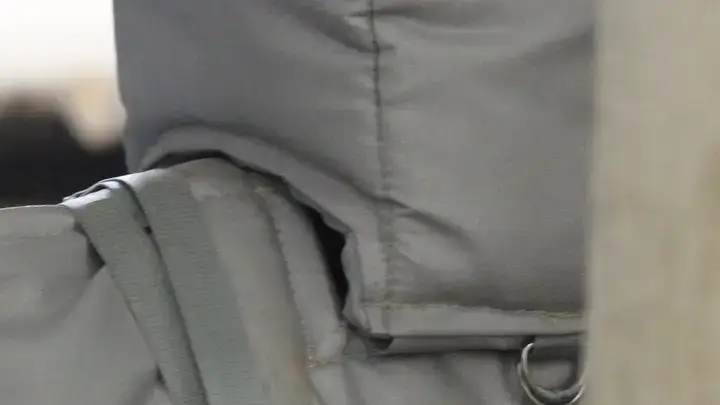
Silicone-cloth covers over a high-temperature core, cut and sewn to the fitting on our own table, closed with D-rings and straps. Insulation you take off and put back.

Where it is the right answer

Valves, flange pairs, manways, exchanger heads and autoclave doors — anything that has to be opened, inspected or serviced. A bare 6-inch gate valve loses about as much heat as four to five feet of bare pipe, and a hard cover means somebody cuts it off the first time it needs turning.

Where it is not

Straight runs. A blanket seals less perfectly than molded sections — figure about 85 percent of the loss recovered — and it costs several times more per foot than pipe sections would.

Not sure which one your line wants?

Tell us the temperature, the size and the space you have. The walk-down is free, the written estimate lands within 24 hours, and it names the material and the thickness it is priced on.

— Start your project

Tell us what needs wrapping.

A short form, a walk-down, and a written estimate within 24 hours. No pressure, no obligation.

or call (214) 603-9142