
Autoclave insulation - Arlington, TX
Autoclave
Composite-curing and sterilization autoclaves across Arlington and the Dallas–Fort Worth Metroplex — shell and both heads insulated in mineral wool, finished in a metal jacket, with a sewn removable cover on the door because the door has to open every cycle. Built for the people who actually run the vessel: maintenance and facility engineers who know what a bare 300°F shell does to a fuel bill and to the room around it.
The numbers are not small. A 6-foot-diameter by 20-foot shell at 300°F loses about 250,000 Btu per hour bare. Three inches of mineral wool cuts that by roughly 96 percent — on a two-shift schedule that is about $9,700 a year in fuel, against a job that prices around $9,500–16,600. Run your own vessel through the calculator and see where it lands.
Two kinds of autoclaves, same physics
Composite-curing autoclaves — aerospace and industrial — typically run 250 to 350°F, cycle after cycle. Sterilization autoclaves run steam at roughly 250 to 275°F. Different products, same problem: a large steel pressure vessel radiating into the room every hour it is hot.
Because an autoclave cycles instead of holding steady, insulation pays twice. It cuts the standing loss while the vessel soaks, and it cuts the energy the heaters have to pour in on every ramp — the shell stops bleeding heat to the room while the controls are trying to climb to setpoint.
Shell, both heads, and a door that still opens
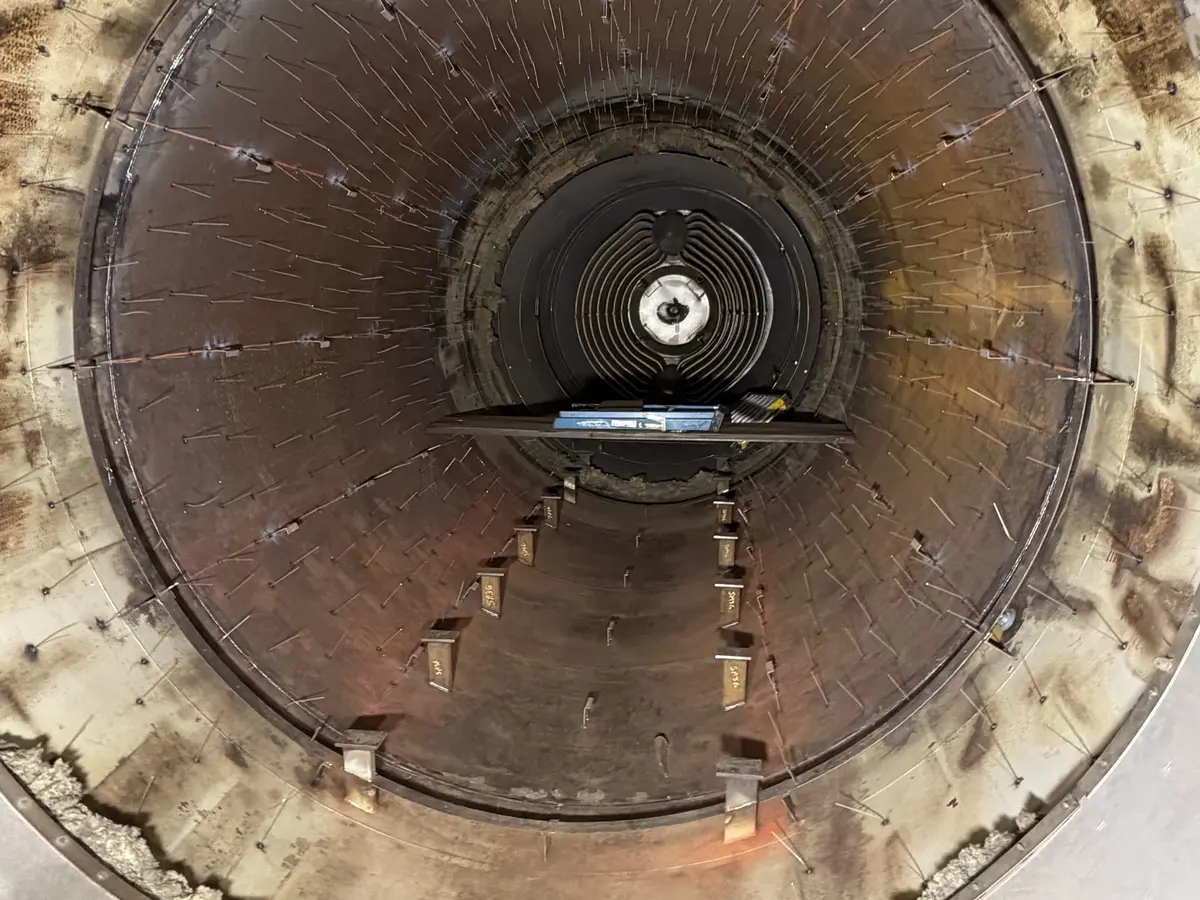
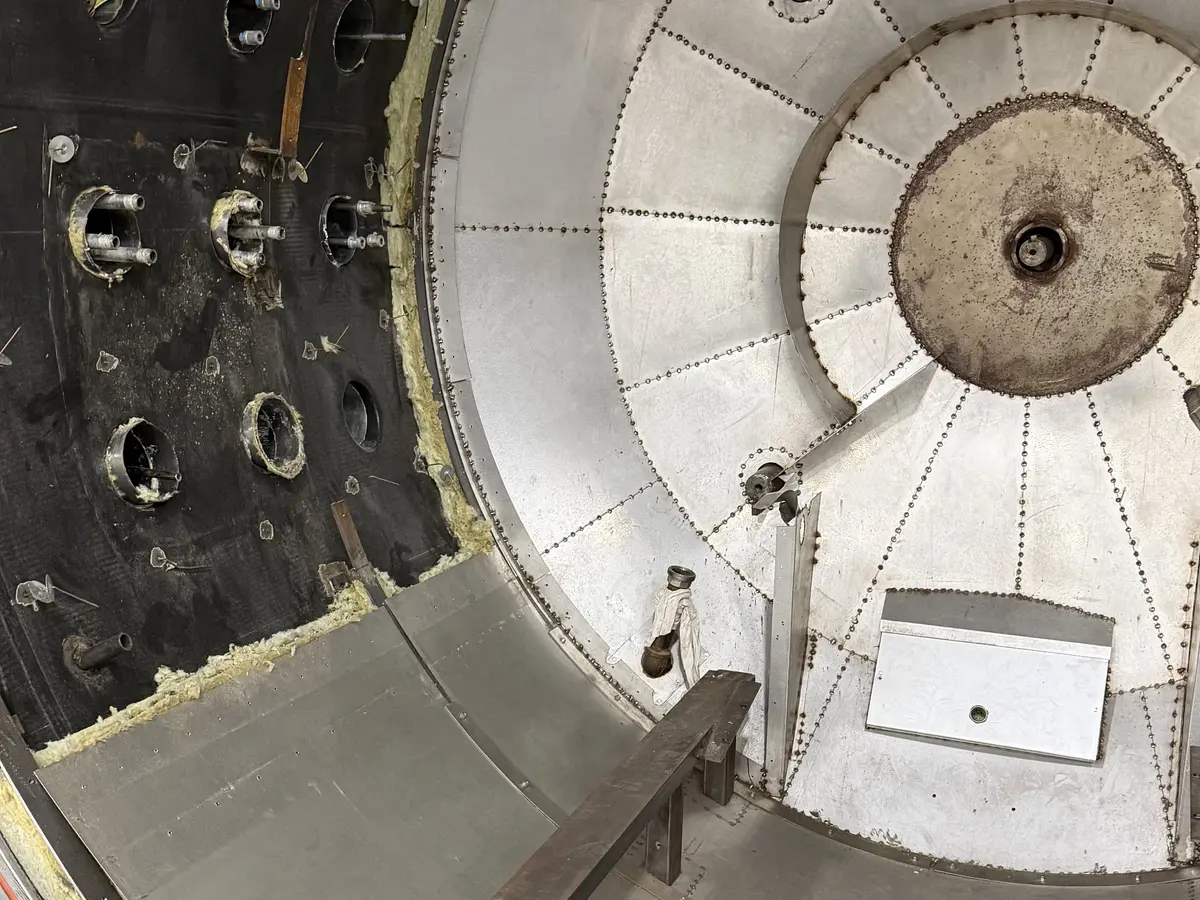
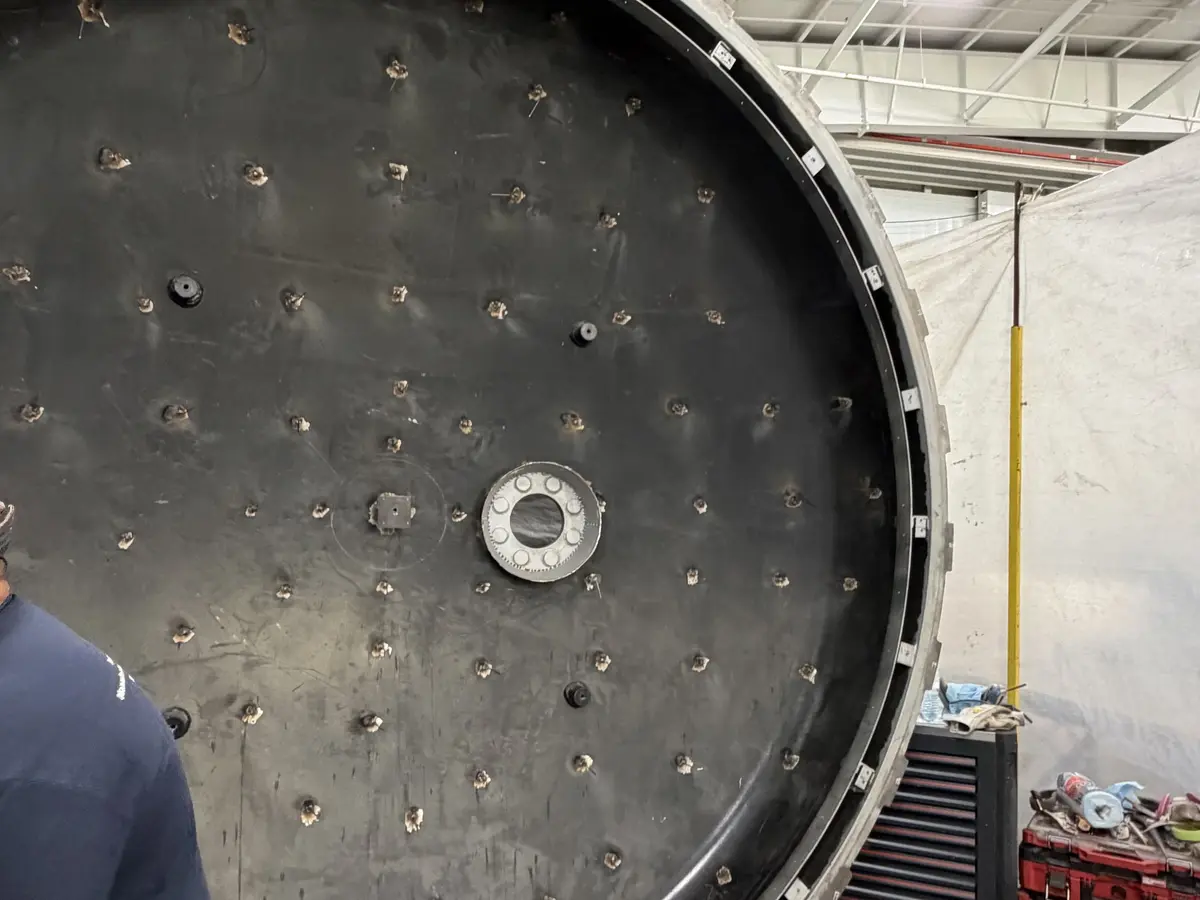
We insulate the full cylinder and both heads, the fixed head and the door. Heads are a third or more of the surface on a short vessel, and the part most jobs skip because they are curved and awkward; ours get segmented sections cut to the dish on our own benches, jacketed to match the shell.
The door is the exception to hard insulation, because it swings open every cycle. It gets a sewn removable blanket — high-temperature cloth over mineral wool, off in minutes for inspection and back on without tools. Nozzles, manways, the steam inlet and the condensate leg get the same treatment, so nobody has to cut jacket to reach a flange.
What a bare shell actually costs
Bare steel at 300°F radiates and convects hard — at 350°F the loss runs about 780 Btu per hour from every square foot. On a 6-foot by 20-foot vessel that is roughly 250,000 Btu per hour going into the room instead of the load.
Three inches of mineral wool cuts that by about 96 percent. On a two-shift schedule the fuel saved is worth around $9,700 a year against a job in the $9,500–16,600 range — payback lands around a year to a year and a half, faster on a vessel that runs hotter or around the clock. The calculator runs this math on your diameter, length, temperature and schedule.
Beyond the gas bill
Fuel is the number on paper, but the floor feels the rest. An insulated shell heats up faster and more evenly, because the heaters stop fighting the loss out the wall — on a curing autoclave that can mean tighter ramp control and less spread between thermocouples.
The room changes too: a quarter-million Btu per hour is a furnace running with the door open. And the jacket surface lands near touch-safe instead of branding anyone who leans on it — the industry design target is about 140°F per ASTM C1055, which matters most on an autoclave, because operators work at the door every single cycle.
Fabricated ahead, installed in your window
It starts with a free walk-down: we measure the vessel, shoot the shell and heads with an IR gun, and note every nozzle and clearance. Written estimate within 24 hours. Our own crew does the work — no subs — and the cutting, sewing and jacket rolling happen on our own benches before anyone touches your vessel.
Most of the shell can be insulated between cycles or during normal downtime; work that needs the vessel cold and open goes into your maintenance window, pre-cut and pre-sewn so wrench time is short. Larger vessels and tanks run the same way — see tank and vessel insulation — and the finish options are on the metal jacketing page.
— What we offer
Shell and both heads covered
Full cylinder plus both dished heads — the surfaces most jobs skip are a third of the loss on a short vessel.
Sewn removable door cover
The door opens every cycle, so it gets a fitted blanket — off in minutes, back on without tools.
Mineral wool to 1,200°F
Standard spec is 3 inches of mineral wool — service temperature far above anything an autoclave runs.
Jacket rolled in-house
Embossed aluminum cut to the shell and heads on our own benches, banded with sealed laps.
Planned around your cycles
Fabricated ahead of your maintenance window so the vessel is down hours, not days.
Before-and-after IR readings
Shell temperatures documented with an IR gun, so the savings are visible, not claimed.
Related work from CJM
Common questions
What does insulating an autoclave cost?
How fast does it pay for itself?
Why does the door get a removable cover instead of hard insulation?
Will the jacket be safe to touch?
In our customers’ words
Get a free walk-down on your autoclave
Tell us the diameter, length and operating temperature. Call (214) 603-9142 or run the numbers in the calculator first.
What helps us prepare your quote
- Identify the pipe, tank, equipment or other system and share dimensions or photos when available.
- Include operating temperatures, indoor or outdoor exposure, existing insulation and the required jacket or finish.
- Tell us about access and shutdown windows. We review the application before recommending materials and a scope of work.
— Start your project
Tell us what needs wrapping.
A short form, a walk-down, and a written estimate within 24 hours. No pressure, no obligation.
or call(214) 603-9142Se habla español